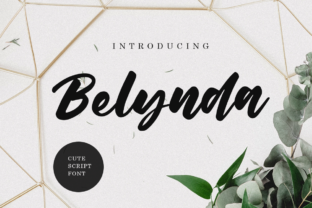
Belynda Font Review: A Script Handwritten Typeface for Branding
There is a specific moment in every boutique branding project where the sans serif foundations are laid, the color palette is locked, and yet the identity still feels sterile. During a recent visual refresh for an artisanal skincare line, I found myself staring at a perfectly functional but emotionally flat brand board. The solution wasn't another geometric display font; it was Belynda. As a script handwritten typeface, Belynda is a beautiful script font with an amazing feel that immediately introduced the organic warmth the project lacked. When testing Fonts for high-end consumer goods, the goal is often to bridge the gap between professional polish and human touch, and this typeface managed to do exactly that without veering into illegibility or excessive ornamentation.
Belynda for Artisanal Packaging Design and Product Labels
When applying Belynda to physical packaging design and product labels, the true test of any script handwritten font is how it maintains its character at reduced sizes. In my skincare branding case study, I needed a typeface that could serve as the primary identifier on small glass dropper bottles and textured paper boxes. Many decorative fonts fail here, becoming muddy when printed on uncoated stock or embossed onto foil. Belynda, however, retained its stroke contrast and fluid connectivity even at 14pt on a matte label mockup. The letterforms possess enough weight variation to remain crisp during commercial printing processes, which is essential for designers creating tangible brand assets.
The "amazing feel" mentioned in the product description translates practically to a sense of bespoke craftsmanship on the shelf. Unlike digital-first scripts that can look too perfect or vector-sharp, Belynda carries subtle imperfections that mimic genuine hand-lettering. This makes it exceptionally strong for organic, handmade, or luxury niches where the packaging needs to communicate value before the customer even reads the ingredients list. For designers working on bakery branding, candle labels, or cosmetic lines, this font acts as a visual shorthand for quality. It performs best as a display element for product names or signature sign-offs rather than dense regulatory text, allowing the script to breathe and function as a premium graphic element within the layout.
Using Belynda in Logo Design and Boutique Brand Identity
Integrating Belynda into logo design and boutique brand identity requires treating the typeface as a raw material rather than a finished lockup. During the concept phase for the skincare identity, I used Belynda not just as a preset wordmark, but as a foundation for custom logotype adjustments. The font’s natural flow provides excellent ligature connections that can be exaggerated or simplified to create a unique proprietary mark. Because it is a versatile script handwritten style, it avoids the generic "wedding font" trap that plagues many creative projects, offering instead a modern elegance suitable for contemporary businesses.
For brand designers, the standout quality of Belynda lies in its ability to anchor a visual system without overpowering supporting elements. In my testing, it paired seamlessly with a clean, neutral sans serif for taglines and functional typography. The script brings the personality, while the secondary font handles the information hierarchy. This balance is critical for brand recognition; you want the audience to remember the feeling of the brand through the script, while still being able to easily navigate the website or read the business card. Whether you are designing for a local café, a creative studio, or a fashion label, Belynda serves as a distinctive voice that elevates the perceived value of the entire identity system.
Belynda for Social Media Graphics and Web Headers
Digital applications present different challenges for script handwritten fonts, particularly regarding screen readability and responsive scaling. When testing Belynda for social media graphics and web headers, I focused on how the intricate details translated to RGB screens and mobile viewports. On Instagram templates and Pinterest pins, the font shines as a headline element, stopping the scroll with its expressive curves. The high contrast of the strokes remains legible against both solid backgrounds and photographic overlays, provided there is sufficient negative space around the letterforms. For content creators and marketers, this means Belynda can drive engagement in story highlights and carousel covers without requiring heavy post-processing effects.
In web design contexts, specifically for hero sections and landing pages, Belynda functions best as a large-scale display font. It turns standard headlines into emotive statements. However, designers must be mindful of load times and rendering if using webfont files; ensuring proper fallbacks is necessary to maintain the user experience. From a practical standpoint, I found that Belynda works beautifully for short, impactful phrases like "Handcrafted with Care" or seasonal campaign slogans. It adds a layer of intimacy to digital interfaces that standard system fonts simply cannot achieve. For online shop owners and bloggers, utilizing this typeface in key conversion areas can help soften the transactional nature of e-commerce and build a stronger emotional connection with visitors.
Font Pairing Strategies and Commercial Licensing for Belynda
Successful implementation of Belynda relies heavily on intelligent font pairing strategies and adherence to commercial licensing protocols. As a highly stylized script handwritten typeface, it demands a supportive partner that recedes visually to let the script perform. In my branding work, I consistently pair Belynda with minimalist sans serifs or structured serifs to create tension and hierarchy. Avoid pairing it with other ornate display fonts or competing scripts, as this creates visual noise and diminishes the impact of both choices. Think of Belynda as the soloist and your body copy font as the orchestra; the distinction ensures clarity across all design assets from business cards to editorial spreads.
Before finalizing any client deliverables, verifying the specific commercial font license for Belynda is non-negotiable. While the aesthetic appeal is undeniable, professional integrity requires ensuring your usage rights cover the intended scope, whether that includes print-on-demand merchandise, embedded web use, or digital product templates. Always review the included styles, alternates, and multilingual support to confirm the file meets technical requirements for your specific region or market. Understanding these parameters protects both the designer and the client. When used correctly and legally, Belynda is more than just a pretty face; it is a strategic tool that transforms generic layouts into memorable brand experiences, validating its reputation as a typeface that turns design projects into standouts.